Advanced Surgical Skill Training & Wet Lab
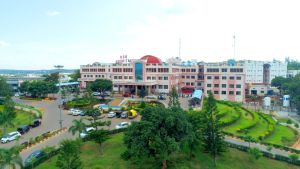
S. Nijalingappa Medical College & H.S.K. Hospital and Research Centre, Bagalkot
Structured in accordance with National Medical Commission (NMC) Competency-Based Medical Education (CBME) guidelines to cultivate precise tissue handling and surgical dexterity before operating room exposure.
Overview
A regional benchmark surgical training center dedicated to bridging the critical transition from anatomical theory to complex operative execution. Utilizing near-life fresh-frozen human cadaveric specimens, soft-embalmed tissue models, and multi-specialty operative towers, our surgical skill lab provides immersive, risk-free procedural simulation for postgraduate surgical residents, fellows, and practicing consultant surgeons.
BASIC & INTERMEDIATE SURGICAL SKILLS (RESIDENCY CURRICULUM)
Structured in accordance with National Medical Commission (NMC) Competency-Based Medical Education (CBME) guidelines to cultivate precise tissue handling and surgical dexterity before operating room exposure.
ADVANCED CADAVERIC SURGICAL SPECIALITY MODULES
High-end procedural masterclasses conducted on preserved cadaveric tissue models under the guidance of national and international faculty:
Orthopaedics, Trauma & Spine Surgery
-
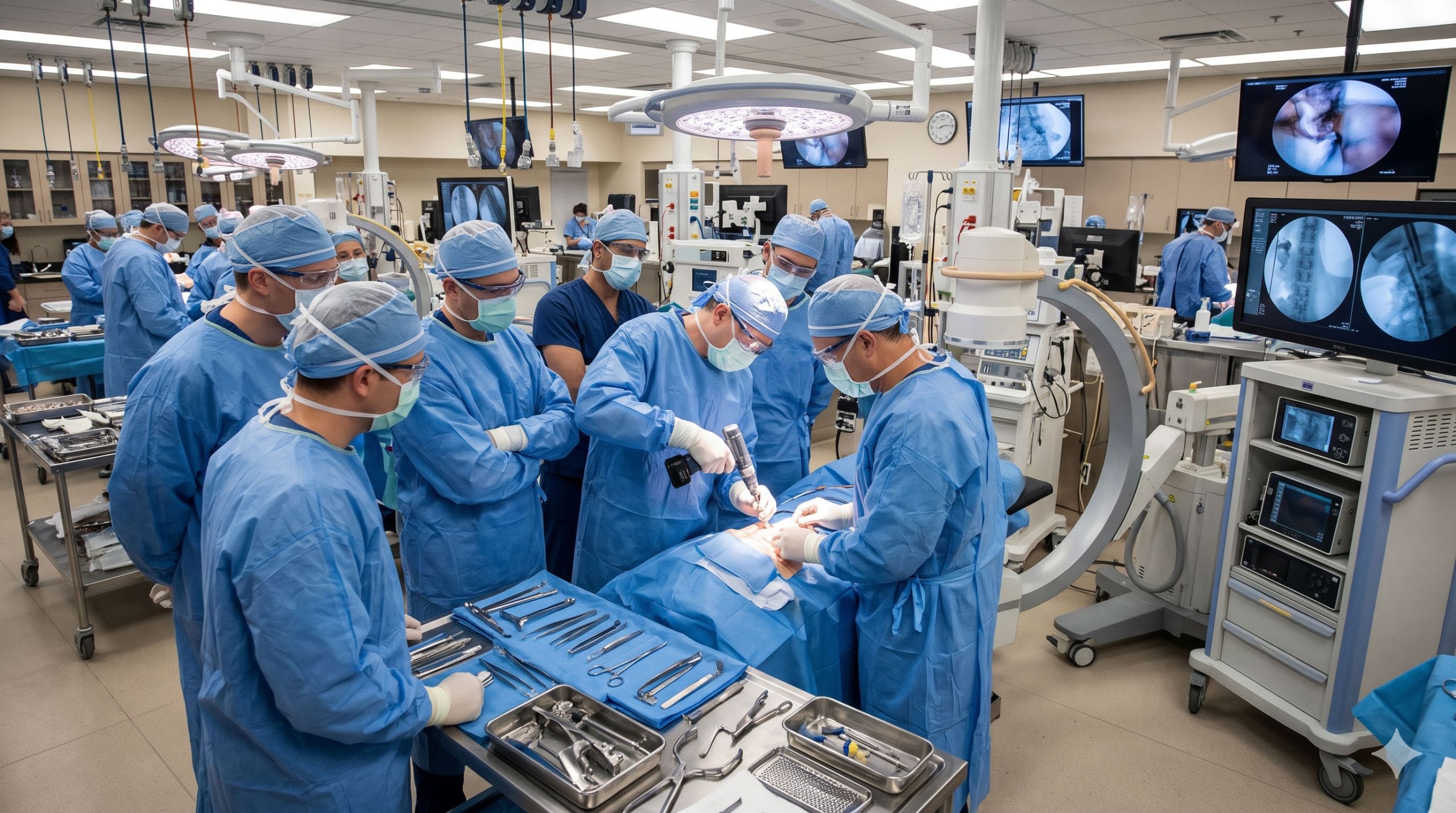
Arthroscopy: Diagnostic knee and shoulder arthroscopy, meniscal repair (inside-out, outside-in, all-inside), ACL/PCL reconstruction, and rotator cuff anchoring.
-
Complex Trauma Fixation: Open reduction and internal fixation (ORIF) for peri-articular fractures, pelvic ring disruptions, and acetabular approaches (ilioinguinal, Kocher-Langenbeck).
-
Spine Masterclass: Cervical lateral mass screw placement, sub-axial and lumbar pedicle instrumentation, minimally invasive spine surgery (MISS) tubular decompression, and transforaminal lumbar interbody fusion (TLIF).
Otorhinolaryngology (ENT) & Skull Base Surgery
-
Temporal Bone Dissection: Mastoidectomy (cortical and canal-wall down), facial nerve decompression, posterior tympanotomy for cochlear implant access, and labyrinthotomy.
-
Advanced FESS & Skull Base: Functional Endoscopic Sinus Surgery, frontal sinusotomy (Draf II/III), trans-sphenoidal approaches to the sella, and endoscopic CSF leak closure.
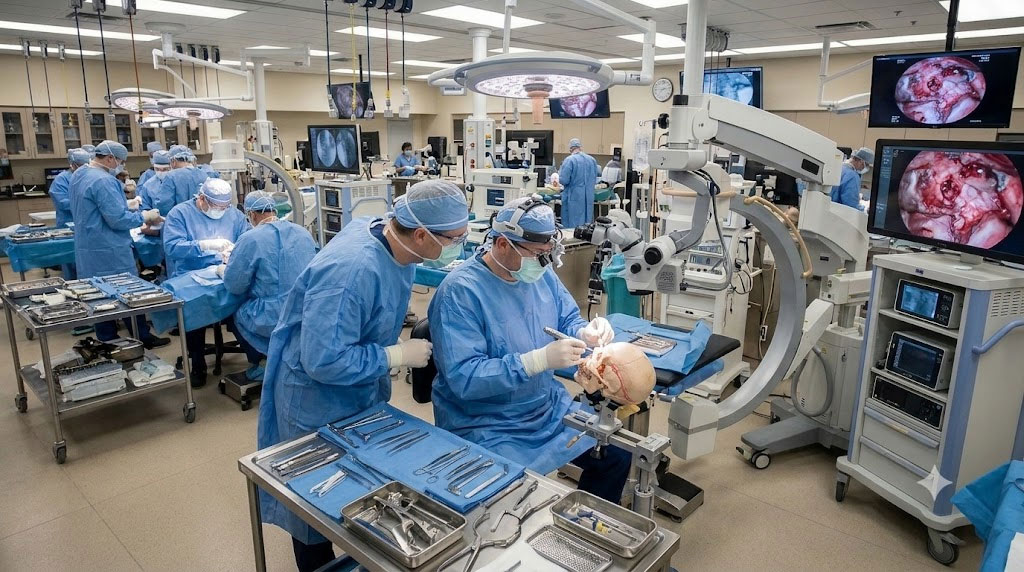
Neurosurgery & Cranio-Maxillofacial
-
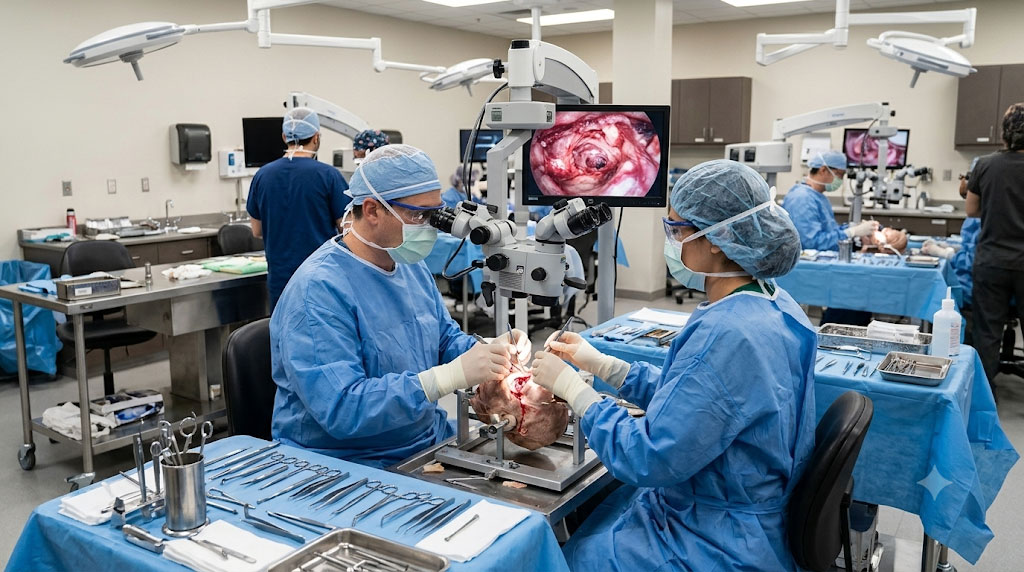
Micro-neurosurgical cranial approaches: Pterional, orbito-zygomatic, retrosigmoid, and far-lateral craniotomies.
-
Microvascular aneurysm clipping simulation and skull base tumor corridors.
-
Craniofacial osteotomies, rigid trauma plating, and reconstruction.
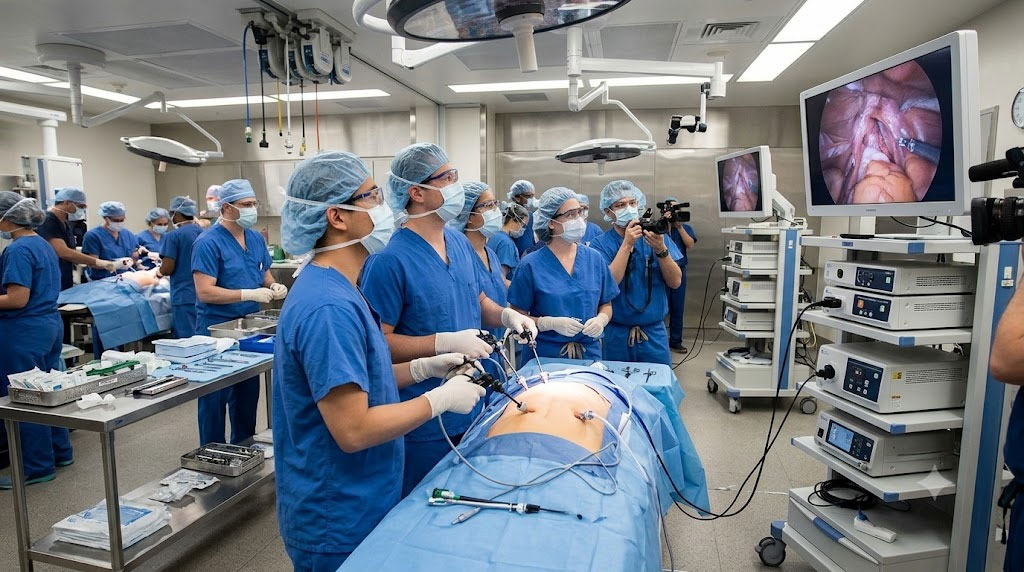
General, GI & Minimally Invasive Surgery (MIS)
-
Advanced Laparoscopic GI surgery: Gastric sleeve procedures, fundoplication, and bowel resection with intracorporeal stapled anastomosis.
-
Laparoscopic Abdominal Wall Reconstruction: TEP, TAPP, IPOM, and transversus abdominis release (TAR) component separation.
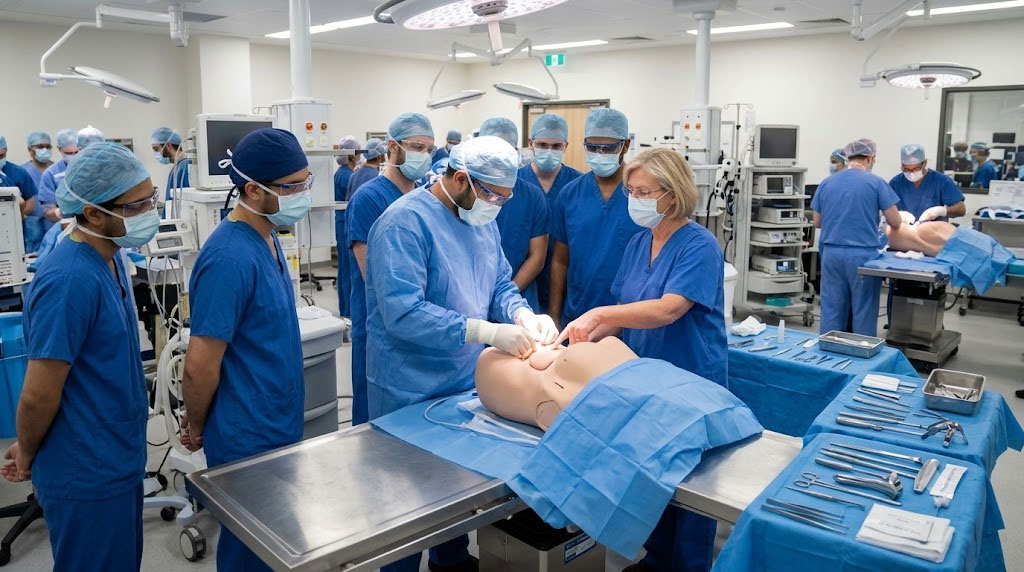
Obstetrics & Uro-Gynaecology
-
-
Retroperitoneal pelvic dissection and internal iliac / uterine artery ligation.
-
Laparoscopic hysterectomy, myomectomy, and pelvic floor reconstruction (sacrocolpopexy)
-
WORKSHOP GOVERNANCE & ETHICAL CADAVERIC PROTOCOLS
-
“Silent Mentor” Ethical Charter: All cadaveric training programs are conducted with the highest degree of respect, dignity, and confidentiality, fully compliant with the Karnataka Anatomy Act.
-
Specimen Quality & Preservation: Cryogenically stored fresh-frozen specimens maintain natural ligamentous flexibility, vascular architecture, and tissue resistance for authentic surgical feedback.
-
Biohazard Safety: Integrated exhaust laminar flow, continuous fluid suction-irrigation, and strict personal protective equipment (PPE) protocols ensure complete laboratory hygiene and safety.